The People of Stanford HAI

Our community thrives on the energy and commitment of the many individuals who share a desire to responsibly guide the future of AI. From the leadership team and advisory council to faculty and fellows, who are supported by a dedicated group of staff members, all are essential to ensuring that we make continual progress toward our mission.

Denning Co-Directors

The co-directors of HAI share a vision of artificial intelligence serving the collective needs of humanity. It is this goal that guides the work of HAI.

John Etchemendy

Provost Emeritus and Patrick Suppes Family Professor in the School of Humanities and Sciences, Stanford University; Denning Co-Director, Stanford Institute for Human-Centered Artificial Intelligence
In addition to co-directing the institute, John taught “Philosophy of Artificial Intelligence” in the winter quarter and played an instrumental role in advancing the National Research Cloud initiative.

Fei-Fei Li

Sequoia Professor, Computer Science Department; Denning Co-Director, Stanford Institute for Human-Centered Artificial Intelligence
Among the many roles she served for HAI in AY20, Fei-Fei published “Illuminating the dark spaces of healthcare with ambient intelligence” in Nature. She also served as a member of the Future of Work Commission convened by California Governor Gavin Newsom and helped formulate the concept for a National Research Cloud.

Denning Co-Directors

The co-directors of HAI share a vision of artificial intelligence serving the collective needs of humanity. It is this goal that guides the work of HAI.

John Etchemendy

Provost Emeritus and Patrick Suppes Family Professor in the School of Humanities and Sciences, Stanford University; Denning Co-Director, Stanford Institute for Human-Centered Artificial Intelligence
In addition to co-directing the institute, John taught “Philosophy of Artificial Intelligence” in the winter quarter and played an instrumental role in advancing the National Research Cloud initiative.

Fei-Fei Li

Sequoia Professor, Computer Science Department; Denning Co-Director, Stanford Institute for Human-Centered Artificial Intelligence
Among the many roles she served for HAI in AY20, Fei-Fei published “Illuminating the dark spaces of healthcare with ambient intelligence” in Nature. She also served as a member of the Future of Work Commission convened by California Governor Gavin Newsom and helped formulate the concept for a National Research Cloud.

Associate Directors

The associate directors of HAI represent the diverse fields and expertise that help enrich the multidisciplinary approach of the institute.

Susan Athey

The Economics of Technology Professor, Stanford Graduate School of Business; Senior Fellow at The Stanford Institute for Economic Policy Research; Member, Institute for Computational and Mathematical Engineering; and Professor, by courtesy, of Economics
Susan published her research on “Computational social science: Obstacles and opportunities” in Science. She also served as a member of the California Governor’s Council of Economic Advisors and provided congressional testimony to the House Budget committee on the impact of AI on economic recovery and the future of work.

Surya Ganguli

Associate Professor of Applied Physics, and by courtesy, of Neurobiology, of Electrical Engineering, and of Computer Science

James Landay

Anand Rajaraman and Venky Harinarayan Professor in the School of Engineering, Professor of Computer Science
James led the Hoffman-Yee and Seed grant process for HAI, from calls for proposals through reviews and decisions. He published “QuizBot: A Dialogue-based Adaptive Learning System for Factual Knowledge,” in Proceedings of the 2019 CHI Conference on Human Factors in Computing Systems (CHI '19). In the spring quarter, James co-taught CS 335: “Fair, Accountable, and Transparent (FAT) Deep Learning.”

Rob Reich

Professor of Political Science, Faculty Director of the McCoy Family Center for Ethics in Society, and the Marc and Laura Andreessen Faculty Co-Director of the Stanford Center on Philanthropy and Civil Society
Rob led HAI’s efforts to create an embedded ethics initiative that will insert ethics modules into core courses in the computer science major. He published “Teaching Computer Ethics: A Deeply Multidisciplinary Approach” in Proceedings of the 51st ACM Technical Symposium on Computer Science Education (SIGCSE’20). Rob also led HAI efforts for the April and June virtual conferences on COVID-19 and AI.

Russ Altman

Kenneth Fong Professor and Professor of Bioengineering, of Genetics, of Medicine (General Medical Discipline), of Biomedical Data Science, and, by courtesy, of Computer Science
Russ led HAI’s efforts for the April and June virtual conferences on COVID-19 and AI. He also published “Geographic Distribution of US Cohorts Used to Train Deep Learning Algorithms” research in JAMA. Forbes magazine highlighted his COVID-19 research in “What A Stanford Researcher’s Fight Against Covid-19 Can Tell Us About The Future Of Drug Discovery.”

Michele Elam

William Robertson Coe Professor of Humanities, Department of English, Center for Comparative Studies in Race & Ethnicity, Race & Technology Affiliate at the Center for Comparative Studies in Race & Ethnicity
Michele led HAI’s diversity, equity and inclusion efforts and created the HAI Visiting Artist program, a collaboration with the Office of the Vice President of the Arts. She also moderated the HAI premiere of “Coded Bias,” with Fei-Fei Li and filmmaker Shalini Kantayya. Michele helped lead the April 1 conference on COVID 19 + AI with Russ Altman and Rob Reich.

Daniel E. Ho

William Benjamin Scott and Luna M. Scott Professor of Law, Professor of Political Science, Senior Fellow at the Stanford Institute for Economic Policy Research
Daniel published a report on “Government by Algorithm: Artificial Intelligence in Federal Administrative Agencies” as well as “Algorithmic Accountability in the Administrative State” in the Yale Journal of Regulation. Daniel also led HAI’s Facial Recognition Technology workshop and resulting white paper, “Evaluating Facial Recognition Technology: A Protocol for Performance Assessment in New Domains.”

Christopher Manning

Thomas M. Siebel Professor in Machine Learning, Professor of Linguistics and of Computer Science; Director, Stanford Artificial Intelligence Laboratory
Christopher’s article on “Emergent linguistic structure in artificial neural networks trained by self-supervision” was published in PNAS (Proceedings of the National Academy of Sciences). He also mentored the team that won second place in the Alexa Prize Socialbot Grand Challenge 3.

Associate Directors

The associate directors of HAI represent the diverse fields and expertise that help enrich the multidisciplinary approach of the institute.

Russ Altman

Kenneth Fong Professor and Professor of Bioengineering, of Genetics, of Medicine (General Medical Discipline), of Biomedical Data Science, and, by courtesy, of Computer Science
Russ led HAI’s efforts for the April and June virtual conferences on COVID-19 and AI. He also published “Geographic Distribution of US Cohorts Used to Train Deep Learning Algorithms” research in JAMA. Forbes magazine highlighted his COVID-19 research in “What A Stanford Researcher’s Fight Against Covid-19 Can Tell Us About The Future Of Drug Discovery.”

Susan Athey

The Economics of Technology Professor, Stanford Graduate School of Business; Senior Fellow at The Stanford Institute for Economic Policy Research; Member, Institute for Computational and Mathematical Engineering; and Professor, by courtesy, of Economics
Susan published her research on “Computational social science: Obstacles and opportunities” in Science. She also served as a member of the California Governor’s Council of Economic Advisors and provided congressional testimony to the House Budget committee on the impact of AI on economic recovery and the future of work.

Michele Elam

William Robertson Coe Professor of Humanities, Department of English, Center for Comparative Studies in Race & Ethnicity, Race & Technology Affiliate at the Center for Comparative Studies in Race & Ethnicity
Michele led HAI’s diversity, equity and inclusion efforts and created the HAI Visiting Artist program, a collaboration with the Office of the Vice President of the Arts. She also moderated the HAI premiere of “Coded Bias,” with Fei-Fei Li and filmmaker Shalini Kantayya. Michele helped lead the April 1 conference on COVID 19 + AI with Russ Altman and Rob Reich.

Surya Ganguli

Associate Professor of Applied Physics, and by courtesy, of Neurobiology, of Electrical Engineering, and of Computer Science

Daniel E. Ho

William Benjamin Scott and Luna M. Scott Professor of Law, Professor of Political Science, Senior Fellow at the Stanford Institute for Economic Policy Research
Daniel published a report on “Government by Algorithm: Artificial Intelligence in Federal Administrative Agencies” as well as “Algorithmic Accountability in the Administrative State” in the Yale Journal of Regulation. Daniel also led HAI’s Facial Recognition Technology workshop and resulting white paper, “Evaluating Facial Recognition Technology: A Protocol for Performance Assessment in New Domains.”

James Landay

Anand Rajaraman and Venky Harinarayan Professor in the School of Engineering, Professor of Computer Science
James led the Hoffman-Yee and Seed grant process for HAI, from calls for proposals through reviews and decisions. He published “QuizBot: A Dialogue-based Adaptive Learning System for Factual Knowledge,” in Proceedings of the 2019 CHI Conference on Human Factors in Computing Systems (CHI '19). In the spring quarter, James co-taught CS 335: “Fair, Accountable, and Transparent (FAT) Deep Learning.”

Christopher Manning

Thomas M. Siebel Professor in Machine Learning, Professor of Linguistics and of Computer Science; Director, Stanford Artificial Intelligence Laboratory
Christopher’s article on “Emergent linguistic structure in artificial neural networks trained by self-supervision” was published in PNAS (Proceedings of the National Academy of Sciences). He also mentored the team that won second place in the Alexa Prize Socialbot Grand Challenge 3.

Rob Reich

Professor of Political Science, Faculty Director of the McCoy Family Center for Ethics in Society, and the Marc and Laura Andreessen Faculty Co-Director of the Stanford Center on Philanthropy and Civil Society
Rob led HAI’s efforts to create an embedded ethics initiative that will insert ethics modules into core courses in the computer science major. He published “Teaching Computer Ethics: A Deeply Multidisciplinary Approach” in Proceedings of the 51st ACM Technical Symposium on Computer Science Education (SIGCSE’20). Rob also led HAI efforts for the April and June virtual conferences on COVID-19 and AI.

Staff

The staff of HAI is the lifeblood of the institute, collaborating with faculty to design and implement programs and initiatives with global impact that support HAI’s research, education, and policy mission. While Michael and Deep led much of the work of HAI staff, Amita Kumar, Director of Administration, oversaw finance, operations, and administration.
Meet our staff:

Deep Ganguli

Director of Research
Deep works with the faculty leadership on HAI grant programs—seed grants to fuel early-stage speculative research, Hoffman-Yee grants to support bold interdisciplinary research teams, and Cloud grants to support ambitious computational research. He also helps organize seminars, workshops, and conferences to convene scholars from across Stanford and beyond to discuss the development and social impact of next generation AI technologies.

Michael Sellitto

Deputy Director
As the founding Deputy Director of HAI, Michael made fundamental contributions concerning all aspects of designing, building, and launching the institute, including those relating to mission, strategy, operations, and budget. He also spearheaded work on HAI’s policy and educational projects, both developing and executing key initiatives spanning the institute and the university itself.

In Spring 2020, HAI bolstered its staff with seasoned professionals across key areas in support of HAI’s research, education, and policy mission. The additions to the team included the following individuals.

Krysten Hommel
Senior Associate Director, Strategic Initiatives
Panos Madamopoulos-Moraris
Director of Partnerships
Stacy Peña
Director of Communications
John Robichaux
Director of Education
Russell Wald
Director of Policy

Staff

The staff of HAI is the lifeblood of the institute, collaborating with faculty to design and implement programs and initiatives with global impact that support HAI’s research, education, and policy mission. While Michael and Deep led much of the work of HAI staff, Amita Kumar, Director of Administration, oversaw finance, operations, and administration.
Meet our staff:

Deep Ganguli

Director of Research
Deep works with the faculty leadership on HAI grant programs—seed grants to fuel early-stage speculative research, Hoffman-Yee grants to support bold interdisciplinary research teams, and Cloud grants to support ambitious computational research. He also helps organize seminars, workshops, and conferences to convene scholars from across Stanford and beyond to discuss the development and social impact of next generation AI technologies.

Michael Sellitto

Deputy Director
As the founding Deputy Director of HAI, Michael made fundamental contributions concerning all aspects of designing, building, and launching the institute, including those relating to mission, strategy, operations, and budget. He also spearheaded work on HAI’s policy and educational projects, both developing and executing key initiatives spanning the institute and the university itself.

In Spring 2020, HAI bolstered its staff with seasoned professionals across key areas in support of HAI’s research, education, and policy mission. The additions to the team included the following individuals.

Krysten Hommel
Senior Associate Director, Strategic Initiatives
Panos Madamopoulos-Moraris
Director of Partnerships
Stacy Peña
Director of Communications
John Robichaux
Director of Education
Russell Wald
Director of Policy

HAI’s Commitment to Action

The HAI mission assumes that AI can be used to improve the human condition. This assumption holds only insofar as we are cognizant of issues of accessibility, diversity, fairness, and justice. Accordingly, in early June, we strengthened our values statement to make explicit our commitment to a more inclusive institute. We formed a diversity, equity, and inclusion committee to assess our current efforts and support the development of best practices. We are committed to an ongoing assessment of our attempts to promote equity at all levels and to support justice and fairness in our research.

Faculty & Fellows

HAI aims to appoint and support promising researchers working at intersections often overlooked by traditional academic departments as well as outstanding researchers pursuing core disciplinary topics. In addition to our fellows, we have more than 175 affiliated Stanford faculty from across all seven schools and more than 90 departments. Marietje Schaake and James Zou are featured as representative profiles of our fellows and affiliated faculty.
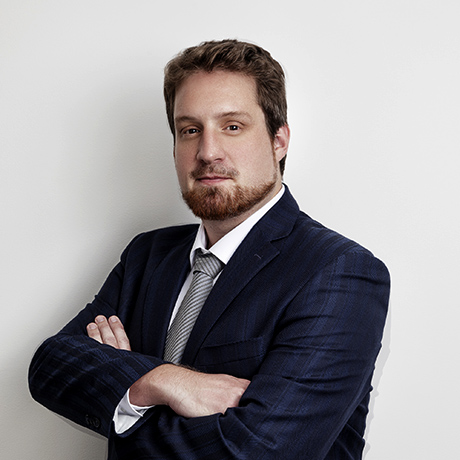
Meet our Faculty and Fellows:

Johannes Eichstaedt

HAI Junior Faculty Fellow

The HAI Junior Fellows program invites early-career scholars to conduct innovative AI research as Assistant Professors in a unique, supportive, and interdisciplinary environment with unparalleled opportunities for impact in research, policy, and education. Johannes Eichstaedt is HAI’s first Junior Fellow appointee.

Johannes is a computational social scientist who is jointly appointed as Ram and Vijay Shriram HAI Faculty Fellow and Assistant Professor (Research) of Psychology. During the 2019-20 academic year, he formed a team to study the impact of COVID-19 on mental health, after early data suggested that depression and anxiety rates had doubled in the months after the virus outbreak. Johannes also received a four-year NIH grant to study the use of social media to detect causal patterns in the mental health of the United States. He co-authored 12 articles, three of which used social media to track COVID symptoms and adherence to public health guidelines, and was featured several times in The New York Times for his expertise on the pandemic’s impact on mental health.
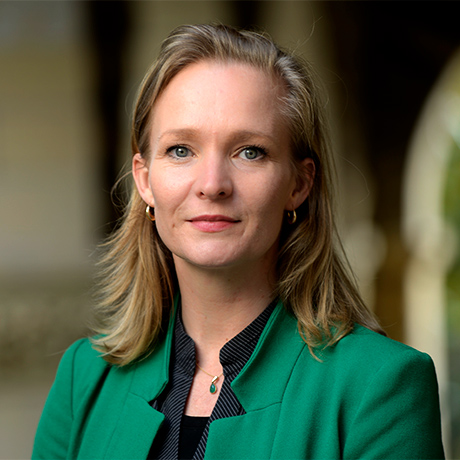
Marietje Schaake
HAI Fellow
Marietje is a Dutch politician who served as a Member of the European Parliament (2009-2019). She is the HAI International Policy Fellow and International Policy Director of the Cyber Policy Center at Stanford. In AY20, she taught two courses: “AI and the Rule of Law, a Global Perspective” and “Technology and the 2020 Election” - and contributed a chapter to Which Side of History, edited by Jim Steyer. Her work has appeared in numerous publications including Foreign Affairs, MIT Tech Review, and Brookings Tech Stream.

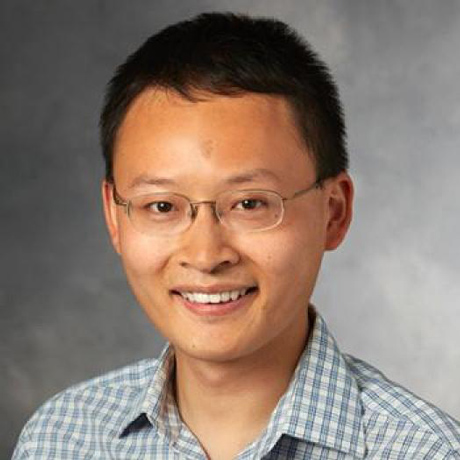
James Zou

HAI Faculty Affiliate
James is an Assistant Professor of Biomedical Data Science and, by courtesy, of Computer Science and Electrical Engineering at Stanford. He also serves as the faculty director of the university-wide AI for Health program. He works on making machine learning more reliable, human-compatible, and statistically rigorous. In AY20, his team published a paper in Nature on the first AI algorithm to diagnose heart diseases from cardiac ultrasound videos. The group also published an AI algorithm that can generate molecular details from cancer histology images in Nature Biomedical Engineering. Learn more about James’ work in this HAI blog post: When Algorithms Compete, Who Wins?

Faculty & Fellows

HAI aims to appoint and support promising researchers working at intersections often overlooked by traditional academic departments as well as outstanding researchers pursuing core disciplinary topics. In addition to our fellows, we have more than 175 affiliated Stanford faculty from across all seven schools and more than 90 departments. Marietje Schaake and James Zou are featured as representative profiles of our fellows and affiliated faculty.

Meet our Faculty and Fellows:

Johannes Eichstaedt

HAI Junior Faculty Fellow

The HAI Junior Fellows program invites early-career scholars to conduct innovative AI research as Assistant Professors in a unique, supportive, and interdisciplinary environment with unparalleled opportunities for impact in research, policy, and education. Johannes Eichstaedt is HAI’s first Junior Fellow appointee.

Johannes is a computational social scientist who is jointly appointed as Ram and Vijay Shriram HAI Faculty Fellow and Assistant Professor (Research) of Psychology. During the 2019-20 academic year, he formed a team to study the impact of COVID-19 on mental health, after early data suggested that depression and anxiety rates had doubled in the months after the virus outbreak. Johannes also received a four-year NIH grant to study the use of social media to detect causal patterns in the mental health of the United States. He co-authored 12 articles, three of which used social media to track COVID symptoms and adherence to public health guidelines, and was featured several times in The New York Times for his expertise on the pandemic’s impact on mental health.

Marietje Schaake

HAI Fellow
Marietje is a Dutch politician who served as a Member of the European Parliament (2009-2019). She is the HAI International Policy Fellow and International Policy Director of the Cyber Policy Center at Stanford. In AY20, she taught two courses: “AI and the Rule of Law, a Global Perspective” and “Technology and the 2020 Election” - and contributed a chapter to Which Side of History, edited by Jim Steyer. Her work has appeared in numerous publications including Foreign Affairs, MIT Tech Review, and Brookings Tech Stream.

James Zou

HAI Faculty Affiliate
James is an Assistant Professor of Biomedical Data Science and, by courtesy, of Computer Science and Electrical Engineering at Stanford. He also serves as the faculty director of the university-wide AI for Health program. He works on making machine learning more reliable, human-compatible, and statistically rigorous. In AY20, his team published a paper in Nature on the first AI algorithm to diagnose heart diseases from cardiac ultrasound videos. The group also published an AI algorithm that can generate molecular details from cancer histology images in Nature Biomedical Engineering. Learn more about James’ work in this HAI blog post: When Algorithms Compete, Who Wins?

Advisory Council

The volunteer Advisory Council was established to provide HAI leadership with well-informed expert advice on external trends and developments related to the institute's mission and programs.
Learn More
Next Up

Digital
Economy Lab

The Stanford Digital Economy Lab brings together leading researchers and experts to examine how digital technologies are transforming work, organizations, and the economy.