A Hub for Policy Impact
National Research Cloud
The effort to shape a bicameral, bipartisan bill was more than a year in the making before reaching a major milestone when it passed as part of the National Defense Authorization Act on January 1, 2021. The new law provides for a federal task force to develop and propose recommendations for a National Research Cloud. Although it is only the beginning of what will be a lengthy process, this initiative represents a critical first step toward democratizing AI technology.
Visit to Washington, D.C.
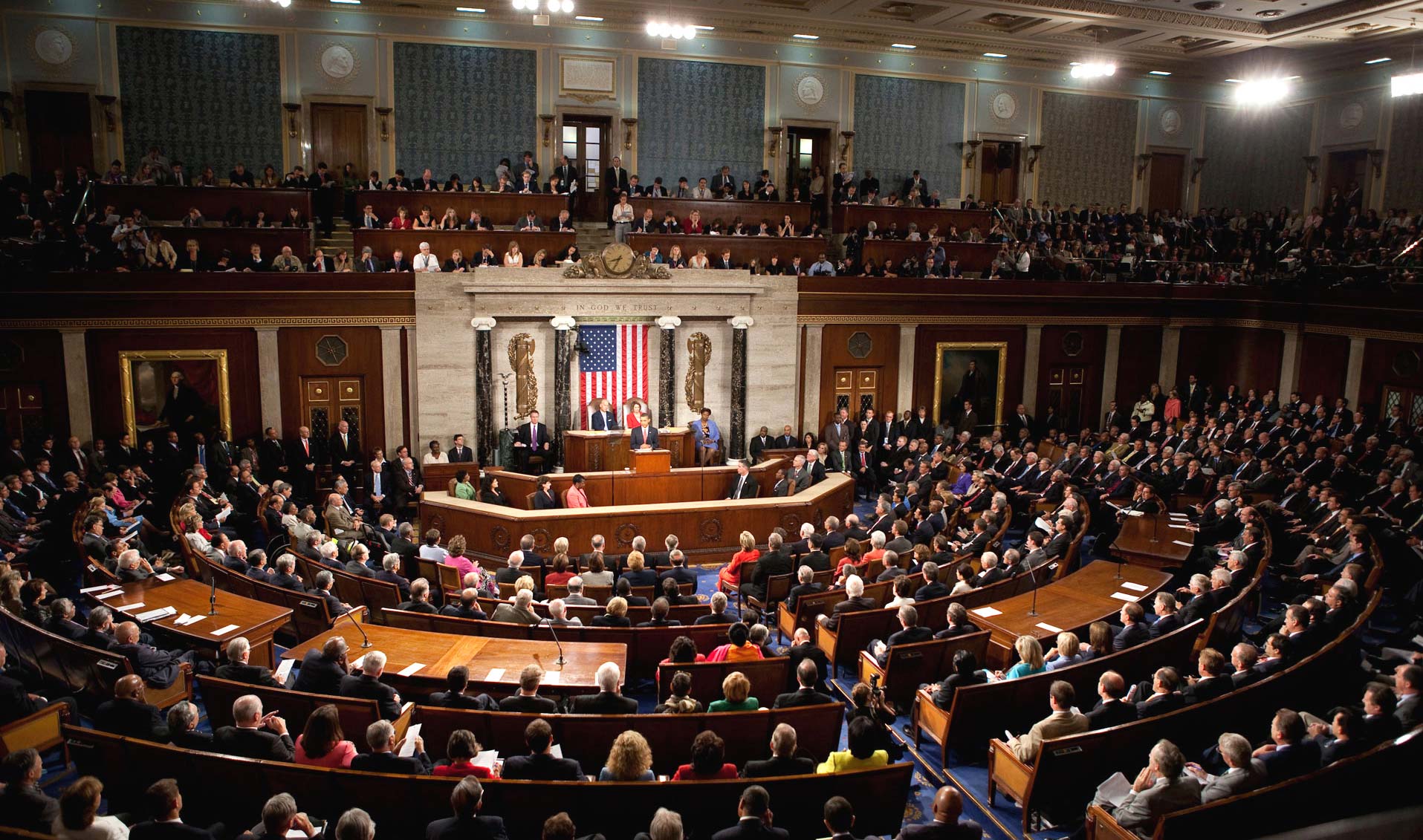
In June 2019, HAI Co-directors John Etchemendy and Fei-Fei Li met with senior policymakers in Washington, D.C. to discuss the growing importance of AI and why government leaders need to be prepared to play a role in shaping its future. The agenda was planned with the goal of building key relationships and included briefings with the National Institutes of Health, National Institute of Standards and Technology, House AI Caucus, Executive Office of the President, the Departments of Defense and Veterans Affairs, DARPA, and a key meeting with Senator Rob Portman (R-OH), Chair of the Senate AI Caucus, whose participation would prove invaluable to garnering support for the National Research Cloud bill.
Government by Algorithm
AI use is widespread across the U.S. federal government; however, few if any agencies are applying the technology in ways that rival the sophistication of the private sector. This uneven adoption curve has raised questions around transparency, fairness, ethics, and efficiency. In 2019, the Administrative Conference of the United States commissioned a team of HAI-affiliated lawyers and computer scientists to examine AI uses among federal agencies. Published in February 2020, the resulting report, Government by Algorithm: Artificial Intelligence in Federal Administrative Agencies, is the most comprehensive study of the subject ever conducted in the United States. It revealed deep concerns about growing government use of AI tools and suggested how AI could be applied to make the federal government work better, more fairly, and at lower cost.
California Future of Work Commission
In August 2019, California Governor Gavin Newsom announced the Future of Work Commission to study, understand, analyze, and make recommendations regarding the impact of technology on work and the best way to ensure prosperity for all. HAI Co-director Fei-Fei Li and Associate Director Susan Athey joined other leaders representing technology, labor, business, education, and venture capital in accepting the invitation to serve as members. Two HAI Advisory Council members co-chair the commission: James Manyika, Chairman and Director of the McKinsey Global Institute, and Mary Kay Henry, International President of the Service Employees International Union (SEIU).
Policy Workshops
HAI regularly organizes invitation-only workshops that convene diverse stakeholders on urgent and timely topics. As an example—Facial Recognition Technology raises profound questions about the role of technology in society. In May 2020, HAI convened a half-day workshop to discuss the question of operational accuracy as the technology is considered for use in new domains. Leading computer scientists, legal scholars, and representatives from industry, government, and civil society participated, and the results of their discussions were published as a white paper, “Evaluating Facial Recognition Technology: A Protocol for Performance Assessment in New Domains.”
As another example, in July 2020 HAI convened a workshop for regulators on “Assessing and Managing Risks with the Use of Artificial Intelligence.”