Research: Guiding Human-Centered AI
HAI Research Focus
The Carbon Footprint of AI
AI systems use considerable amounts of power and can generate alarmingly high volumes of carbon emissions. Accurate reporting is essential for understanding the potential climate impact of research projects. A team from Stanford, Facebook AI Research, and McGill University devised a framework for tracking real-time energy and carbon usage, along with a leaderboard to motivate engineers to think about the environmental impact of their work. Stanford computer science PhD student Peter Henderson served as lead author of the study, working closely with Stanford professors Dan Jurafsky and Emma Brunskill. By making it easy to measure the carbon footprint of AI, this group hopes to drive more commitments to energy-efficient algorithms.
Smarter Hospitals
Advances in machine learning and contactless sensors have given rise to ambient intelligence—physical spaces that are sensitive and responsive to the presence of humans. Fei-Fei Li, HAI Co-director, Arnold Milstein, Professor of Medicine and Director of Stanford’s Clinical Excellence Research Center; and Albert Haque, Department of Computer Science graduate student, co-authored a study showing how this technology could improve patient outcomes in healthcare settings. They concluded that thoughtful use of emerging data science and AI technology would enable a better understanding of the complex interplay between physical environments and health-critical human behaviors. Their findings were published in the September 2020 issue of Nature.
Curiosity-Driven Algorithms
Computational neuroscientist and Assistant Professor of Psychology and Computer Science Daniel Yamins and Professor of Human Biology Michael Frank have been collaborating on developing curiosity-driven systems that mimic the way children learn, with the ultimate goal of making more effective diagnoses for a variety of developmental disorders. In July 2020, Yamins published “Active World Model Learning with Progress Curiosity,” which provides a foundation for their research into children’s curiosity.
Grant Programs for AI Research
Grant Programs for AI Research
HAI Seed Grants
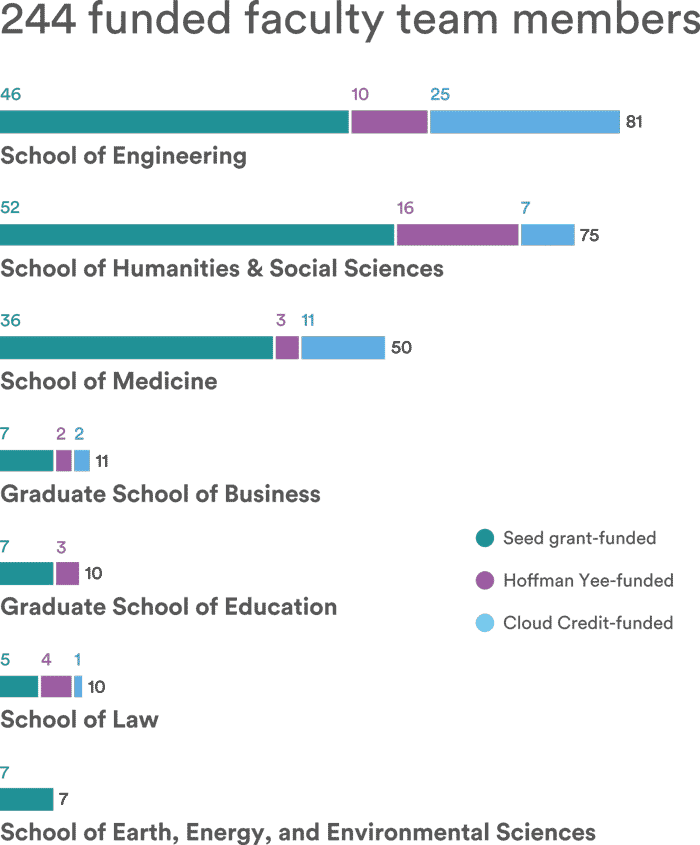
HAI Seed Grants fund speculative, early-stage research proposals with an objective of getting initial results that are likely to secure further support from internal and external funders. Since 2018, this program has allocated nearly $5.5 million. Topics ranged from AI for Scientific Discovery to Virtual Multisensory Interaction to AI in the Regulatory State.
Hoffman-Yee Research Grants
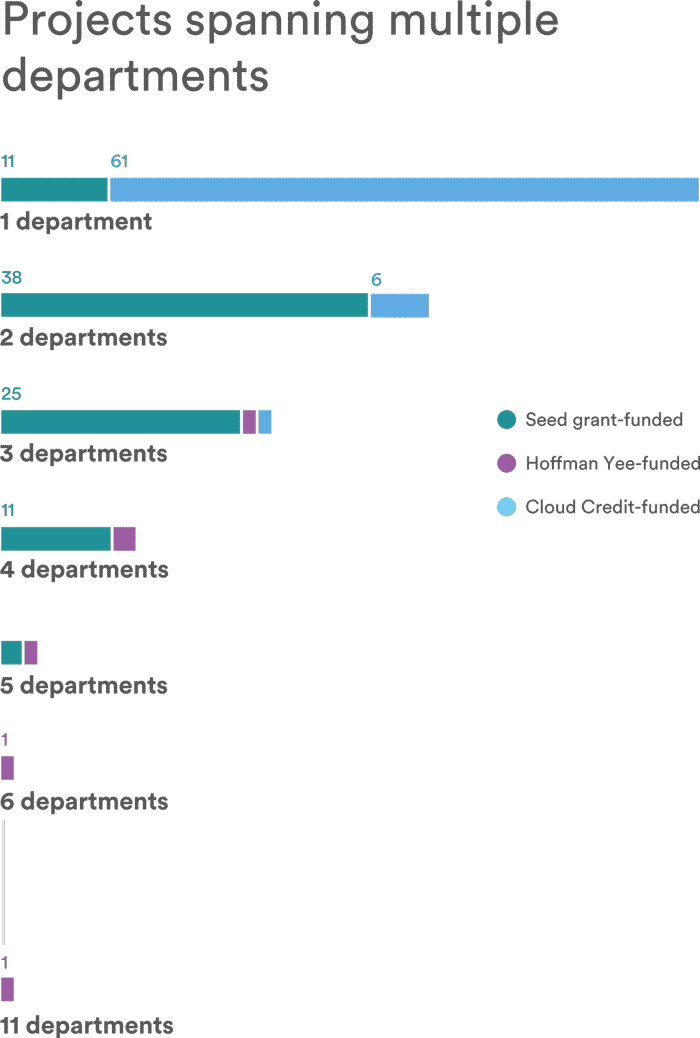
Hoffman-Yee Research Grants fund ambitious projects that address significant scientific, technical, or societal challenges requiring interdisciplinary collaboration. In its first year, the program awarded $500,000 to six interdisciplinary teams. Successful projects were selected for their boldness, ingenuity, and potential for transformative impact. Teams will be eligible to compete for additional funding. The process included proposal reviews by an ethics review board to evaluate the potential benefits and harms to society of the proposed research. This program was made possible by a gift from philanthropists Reid Hoffman and Michelle Yee.
Cloud Credit Grants
Cloud Credit Grants from Google and AWS provide the cloud compute required for rigorous AI research. Credits are used to advance promising, novel, or emerging research that requires advanced computational resources provided by the commercial cloud. In the 2019/20 academic year, AWS awarded $2 million in credits to faculty representing 15 departments across six of the seven university schools. A similar program launched in the fall of 2020 for Google cloud credits.